
Attracting Butterflies: Link Between Monarchs & Zinnias
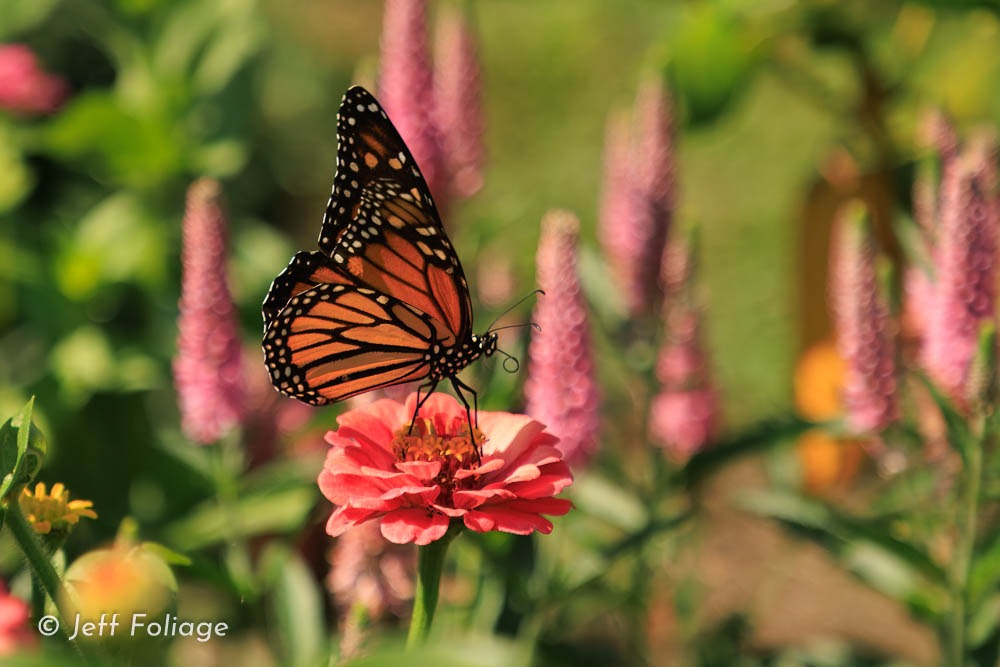
Is your garden attracting butterflies? Or pollinators in general? See how female monarch butterflies use nectar-rich zinnias for fuel and discover how to plant a thriving pollinator haven.
What is a pollinator
Just so you know, I’m going to be focusing on attracting butterflies in general. Humming birds & Bees visiting my garden will benefit from the different nectar rich flowers plus they love my vegetable garden (Tomato, Dill, squash, and basil, all attract bees and in the case of dill, fennel, and parsley, butterflies as well.
Basically a pollinator is anything that helps move pollen from one flower to another. This movement fertilizes a plant, helping to make seeds, fruits, and new plants. Some plants can pollinate themselves, and others use wind or water to move their pollen. But many plants need help from insects and animals like bees, butterflies, birds, and bats.
Pollinators visit flowers to find food, shelter, and nest-building materials. Some pollinators, like bees, collect pollen on purpose. Others, like butterflies or birds, move pollen by accident as they move. As they drink nectar or land on flowers, pollen sticks to their bodies and gets carried to the next flower they visit. This is how pollination happens!
Why are pollinators important?
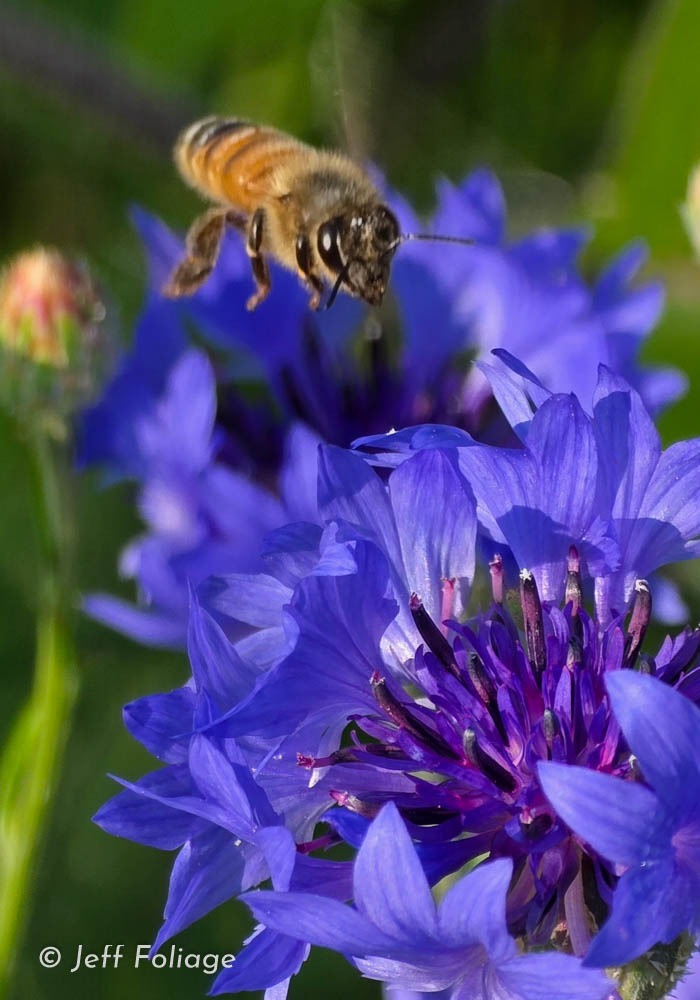
Beyond their environmental benefits, pollinators serve as a vital backbone for maintaining a strong and thriving agricultural economy. To highlight their financial impact, honey bee pollination contributed to more than $19 billion worth of U.S. crop production in 2010 alone, with other native insect pollinators generating nearly $10 billion more.
Roughly one out of every three bites of food we consume on a daily basis relies directly on the hard work of animal and insect pollinators.. By facilitating fertilization, these creatures enable a wide variety of plants to successfully produce essential seeds, nutrient-rich fruits, and fresh vegetables.
The long-term stability and overall vitality of ecosystems across the globe depend heavily on the continuous presence of pollinators. In fact, a vast majority—at least 75%—of all flowering plant species across the planet rely entirely on insects and animals to carry out their pollination cycles. This remarkable effort sustains more than 1,200 food crops and over 180,000 distinct plant species—vital vegetation that actively works to stabilize surrounding soils, purify our air, generate breathable oxygen, and provide crucial habitat for wildlife.
Taking the whole pollinator approach
Attracting pollinators in a perfect world means providing nectar rich flowering plants AND in the case of butterflies, pairing these plants with host plants. This means providing the plant to female butterflies to lay their eggs on. Next the butterfly springs forth (as a caterpillar), proceeds to grow and pupate (goes into it’s chrysalis (cocoon) and in a week or two the adult emerges and can now enjoy your nectar rich flowering plants nearby.
This is where the argument against butterfly bushes (Not butterfly weed) comes in. The butterfly bush is popular because it is sold in the big box stores, it’s easy to grow, tastes great (to butterflies) and is less filling. But it is an aggressive grower, crowding out native plants (strike 1) and it is not a host to any species (strike 2). As a photographer, I love butterfly bush because it’s very good at attracting butterflies.
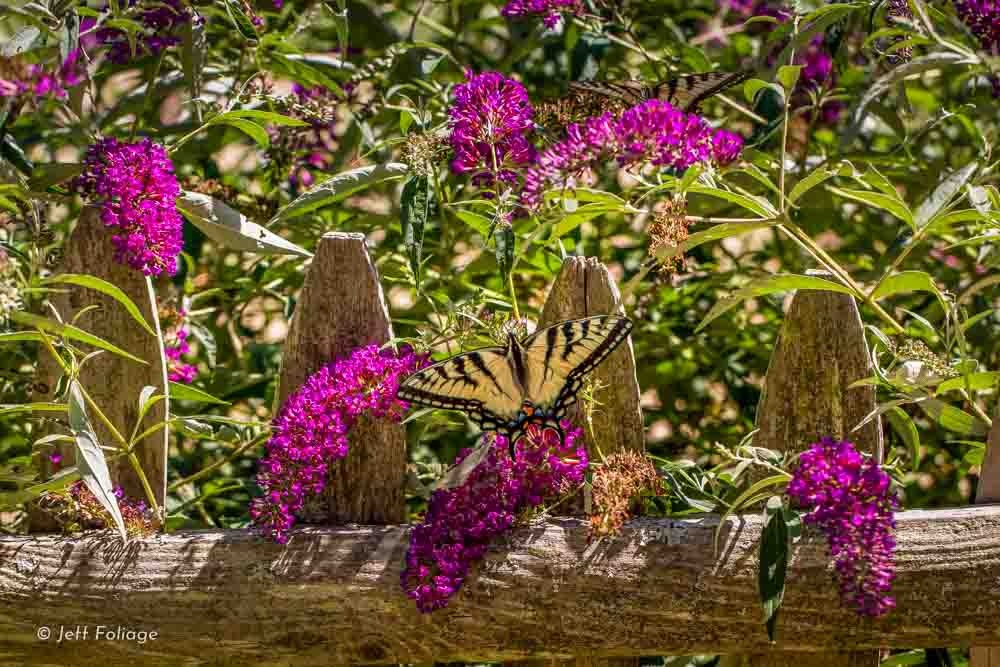
Lets talk about HOW aggressive it is. Each of those f lovely flower spikes (A flower spike, botanical term: panicle) carries approx.. 40,000 lightweight seeds that float on the wind and are viable for 3-5 years waiting for the right conditions. So in the above picture we see around 8 flower spikes and that means up to 320,000 seeds in just this one year. AND I guarantee that this was a big bush with 50 or more spikes and that is probably not even close to accurate and in one year it spreads somewhere north of 2,000,000 seeds!
Host Plants
What are host plants?
How do host plants help when it comes to attracting butterflies?
A host plant is a specific plant species that a female butterfly relies on to lay her eggs and provide the exclusive food source for her caterpillars after they hatch. Unlike adult butterflies—which are generalists and will sip nectar from almost any flower—caterpillars are highly specialized and usually can only digest the leaves of specific host plants (AI sourced)
Top 10 Butterfly Host Plants
- Milkweed (Asclepias spp.): Essential food source for Monarch butterfly caterpillars.
- Passionflower (Passiflora spp.): Favorite host vine for Zebra Longwing and Gulf Fritillary caterpillars.
- Parsley, Dill, and Fennel: Preferred garden herbs for Black Swallowtail caterpillars.
- Pawpaw Tree (Asimina spp.): The exclusive host tree for Zebra Swallowtail caterpillars.
- Violets (Viola spp.): Low-growing plants that host various Fritillary butterfly species.
- Asters (Symphyotrichum spp.): Vital late-season host plants for Pearl Crescent and Northern Crescent butterflies.
- Spicebush (Lindera benzoin): Native shrub hosting the Spicebush Swallowtail.
- Willows (Salix spp.): Woody plants that feed the caterpillars of Mourning Cloak and Red-Spotted Purple butterflies.
- Snapdragons (Antirrhinum spp.): Popular flowering garden plants that host the Common Buckeye.
- Black Cherry (Prunus serotina): Native tree utilized by Eastern Tiger Swallowtail caterpillars.
I live in the New Hampshire and the “main” host plant I am providing this year is Common Milkweed which means I am concerned mostly with attracting Monarchs. I’m also growing a single plant of dill and next year I plan to grow more dill and parsley to attract black swallowtails. You should look for native host plants that are recommended in your area of the country (or world).
Host plants, very simply, are plants that a specific type of butterfly is drawn to, to lay its eggs on. Certain butterflies like the Monarch has only one plant type which is milkweed but there are many types of milkweed that are acceptable for a monarch. From the common milkweed (Asclepias syriaca) to showy milkweed (Asclepias speciosa) and many more.
Click the links in order to check the pros/cons of different varieties and some are easier but that doesn’t mean you should have it in your garden. I have common milkweed and it went from 6 plants (24-36 in) last year to 18 plants 36-48in this year. Next year I will be cutting a lot of shoots as they come up next May to keep the milkweed from taking my garden over…
Types of Flowers for Attracting Butterflies
Top 20 Nectar-Rich Butterfly Flowers
- Milkweed (Asclepias spp.): Dual-purpose plant providing critical nectar and caterpillar host leaves.(bonus)
- Lantana (Lantana camara): Tightly packed flower clusters offering constant, accessible nectar.
- Purple Coneflower (Echinacea purpurea): Sturdy, sun-loving perennial adored by monarchs and fritillaries.
- Joe-Pye Weed (Eutrochium spp.): Massive, fragrant late-summer domes that attract large swallowtails.
- Zinnia (Zinnia elegans): Bright, flat-topped annuals with long bloom times that make easy landing pads.
- Butterfly Bush (Buddleia davidii): Long, honey-scented floral spikes loaded with high-energy nectar.
- Blazing Star / Liatris (Liatris spp.): Tall purple spikes that bloom from the top down, a favorite for migrating monarchs.
- Mexican Sunflower (Tithonia rotundifolia): Vivid orange-red annuals that draw in numerous species from a distance.
- Aster (Symphyotrichum spp.): Crucial late-season autumn fuel for active flyers and migrators.
- Goldenrod (Solidago spp.): Native powerhouse providing heavy fall nectar loads.
- Tall Verbena (Verbena bonariensis): Airy, cluster-topped stems favored by a wide variety of smaller and larger butterflies.
- Bee Balm (Monarda spp.): Tubular blooms packed with rich nectar for diverse winged visitors.
- Black-Eyed Susan (Rudbeckia hirta): Heat-tolerant yellow petals offering dependable summer sustenance.
- Garden Phlox (Phlox paniculata): Fragrant, dense flower heads that bloom heavily through mid-summer.
- Pentas (Pentas lanceolata): Star-shaped tubular clusters providing continuous sweet rewards.
- Cosmos (Cosmos bipinnatus): Delicate, colorful annual blossoms featuring wide landing zones.
- Yarrow (Achillea millefolium): Flat flower tops packed with tiny, nectar-dense florets.
- Coreopsis (Coreopsis spp.): Hardy, sun-loving yellow blooms with extended seasonal presence.
- Ironweed (Vernonia spp.): Tall, intense purple late-bloomers built for heavy pollinator traffic.
- Sunflower (Helianthus annuus): Broad, open heads supplying simple access to surface nectar.
This year I’m growing 8 out of the 20 top nectar rich flowers that are popular with butterflies, bees, and hummingbirds.
Zinnias
I’m going to focus in on zinnias as this is my first year growing them. I grew them in my front garden and knowing any better, I ripped open the packet from the store, poured the seeds into my hand and shook them out onto the dirt. I mussed up the surface and watered. After all that hard work I sat down and had a coffee… 😁
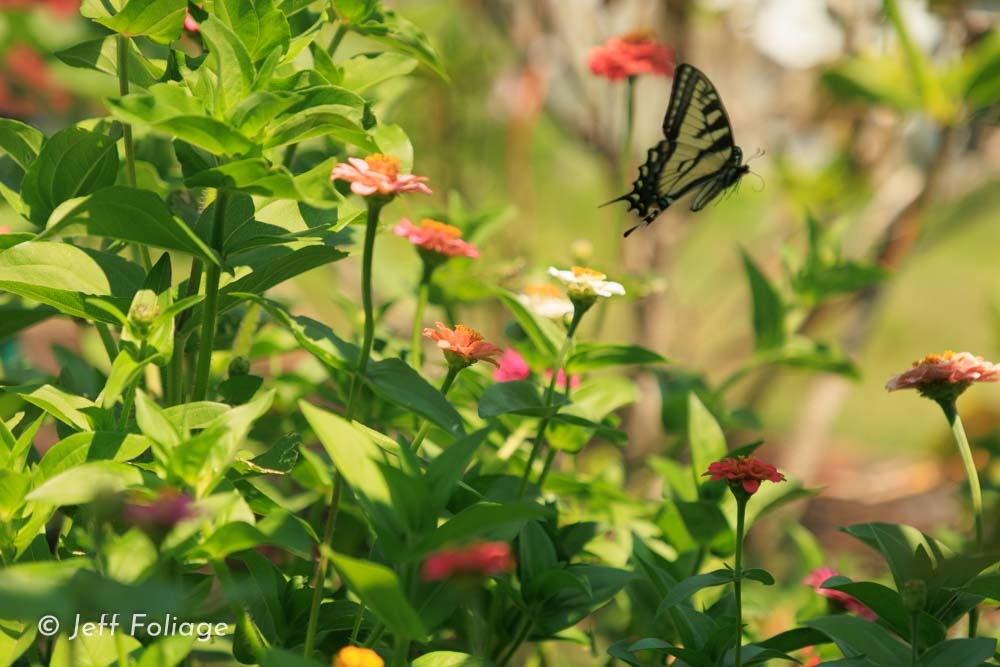
If you’re looking for a prolific annual flower for your garden in a wide range of colors, try zinnias. The plants range from low growing, to tall and statuesque. Flowers come in all the colors of the rainbow depending on the variety. Mine are anywhere from 12 in to 24 in.
They ARE annuals! and for those how can’t remember the difference between annuals and perennials, these annuals need to be seeded every year! My perennials include echinacea (coneflower) and beebalm which “should” come back each year.
When & Where to Plant Zinnias
Here are the basics for growing zinnias.
- Light: Zinnias grow and flower best in full sun. They can flower in part shade, especially in warmer climates with afternoon shade, but they may be more susceptible to disease and have fewer flowers.(mine have afternoon shade but have tons of flowers)
- Soil: Zinnias grow best on fertile, well-drained soils high in organic matter. Well-drained soil is important because zinnia seedlings can be prone to rotting in cool, wet soils. I put cardboard down on the lawn, put down 3-4 inches of bagged dirt and watered, done!
- Spacing: Plant zinnia seeds a few inches apart in rows or clumps. Thin to 8 to 18 inches apart, depending upon the variety, once the plant has grown four leaves. I threw the seed down and it grew where it was thrown
- Planting: Plant zinnias in spring after all danger of frost has passed, around the same time you’d plant tomatoes. Zinnias are easy to grow directly-seeded into the garden. I planted in mid May (last frost was 22 May) and they don’t seem to be too worse for wear.
Creating Your Own Butterfly Haven
Addendum: I don’t believe in capturing and raising monarchs in cages (any kind). I do believe doing what I can to provide nectar rich flowers, host plants, and watering plates (sand and rocks in a tray that is moist). Some people feel they are doing more good by raising them until they are ready to fly away. but there are groups looking into this (read this article on Keeping Monarchs Wild). I you feel the urge to captive raise please visit Project Monarch Health, and this page for Monarch Joint Venture. There is more to it than just buying a habitat cage from Amazon and growing milkweed…
Building a garden for attracting butterflies doesn’t require a master degree in botany or a massive plot of land, sometimes it just takes a packet of zinnia seeds, a patch of common milkweed, and a little patience. By pairing nectar-rich annuals with native host plants, you aren’t just creating a beautiful backdrop for your yard; you’re providing a vital stopover for attracting butterflies throughout the season.
Whether you’re out there with a camera trying to capture that perfect monarch landing on a pink zinnia, or just enjoying a morning cup of coffee while the garden comes alive, bringing butterflies to your space is endlessly rewarding.

Jeff “Foliage” Folger
Professional Photographer & New England Guide
Landscape Photographer | Blogger | FAA Part 107 Drone Pilot
Specializing in the rugged coastlines and seasonal transitions of New England. 2026 Quadricentennial contributor.
Explore more New England scenery at Vistaphotography.com
Find your next autumn adventure at Jeff-Foliage.com