
Macro Photography in the garden
There is a hidden, intricate world right in your backyard, and macro photography is the best way to capture it
Macro photography is simply taking extremely close-up pictures of very small things, making them look big and clear like insects or flowers.
Cellphones vs. Dedicated Macro Equipment
Many times your cellphone will do an adequate job, but even a cellphone will not focus closer than 6-15 inches. It comes down to how good your cellphone camera is. I buy my cellphone for it’s camera and I upgrade every 3 years or so. Even if you don’t own the latest or greatest, if you practice and learn the limitations of your phone, you can make really good images
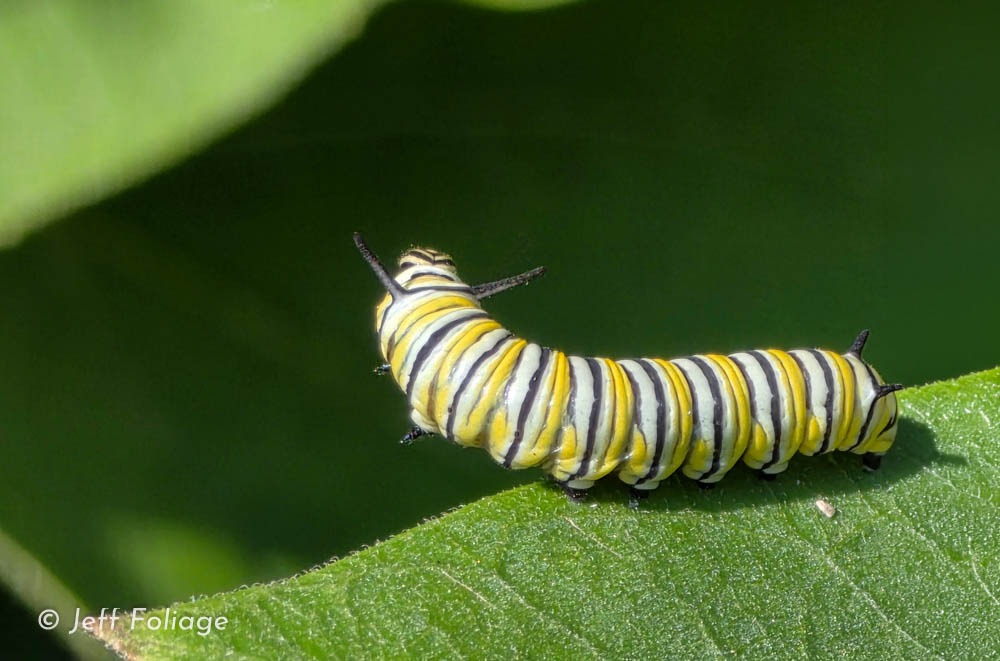
A dedicated macro lens will allow you to focus within 2-4 inches and allow very close up sharp images.
Key Benefits of a Macro Lens
- Life-size 1:1 magnification: Projects your subject onto the camera sensor at actual physical size.
- Extreme sharpness: Built to resolve ultra-fine details at very close working distances.
- Flat field focus: Keeps flat subjects like stamps or coins sharp from the center to the very corners.
- Versatile working distance: Allows comfortable space between the front of the lens and the subject to avoid blocking light.
So whether you use your cellphone will depend on your purpose for taking pictures. Most people are not going to spend one to two thousand dollars just to shoot macro. But if you already have a dedicated DSLR camera and are thinking about taking your close-up shots to the next level, maybe a macro lens would be a good buy for you. The Ef 2.8, 100mm IS macro lens I shoot with is in my Amazon store here.
Choosing & Approaching Your Garden Subjects
Most people start photographing flowers in their garden. Unlike insects, the flowers don’t really mind if you stick a big lens in their face and a re quite willing to pose for their close-up. This is great if you are just starting out and getting used to that new macro lens or don’t want to chase you subject across the yard like a mad person.
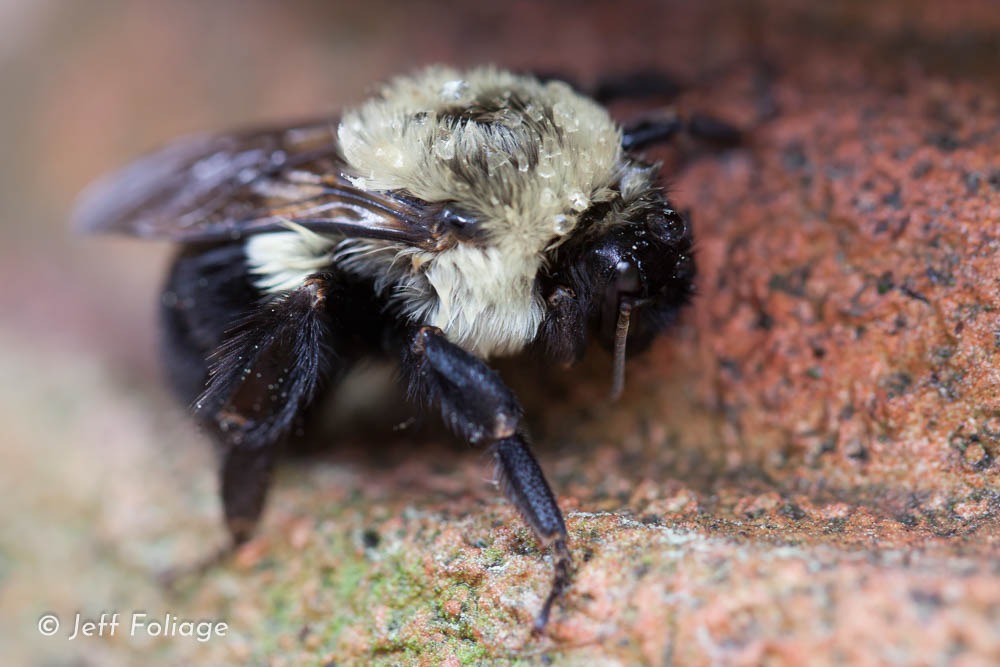
Butterflies on the other hand are less likely to sit still. The bumble bee in the above shot was cold and wet after a shower overnight and was not in a mood to fly off so I took my shot in close. Now, because of how skittish butterflies are, I usually end up photographing them at around 7 plus feet away and in which case my macro is not much use. It’s just a 100mm lens at this point which isn’t why I carry it.
Mastering Depth of Field (DOF) in Macro Photography
One of the problems of a macro lens is the shallow depth of field. The Shallow DOF means only a small portion of the subject may be in focus compared to a standard zoom lens.
Aperture Choices (F-stop Demystified):
- Wide Open (f/2.8–f/4): Creates soft backgrounds (bokeh), but limits sharp focus to tiny areas (like just the insect’s eyes).
- Mid-Range (f/8–f/11): The sweet spot for balancing subject sharpness with reasonable shutter speeds.
- Narrow (f/16–f/22): Maximum detail across the subject, but requires plenty of light/tripod.
Depth of Field (DOF) Examples
Watch your aperture because it affects your DOF because macro lenses will easily magnify the “lack” of DOF. Real simply DOF or Depth of Field means exactly that, How much of the subject is in focus.
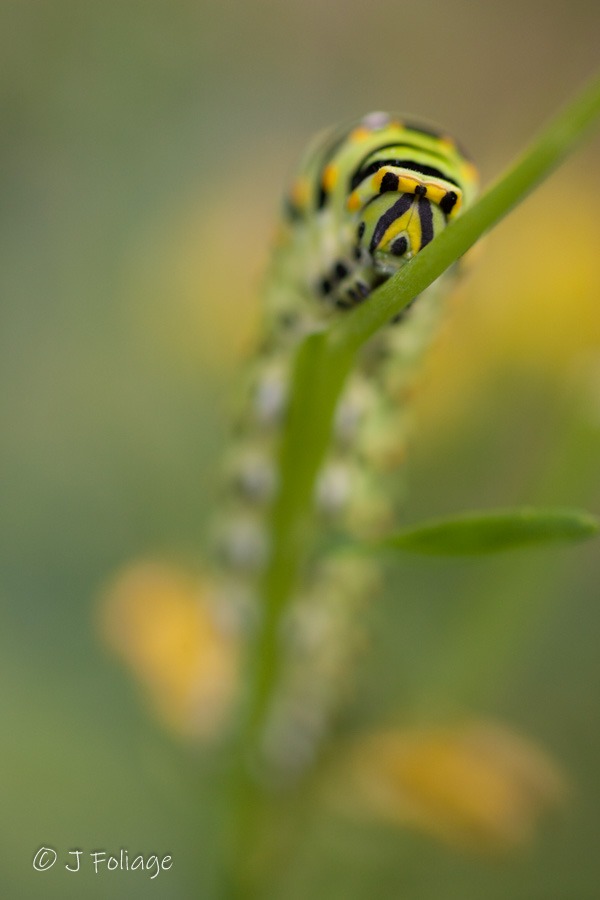
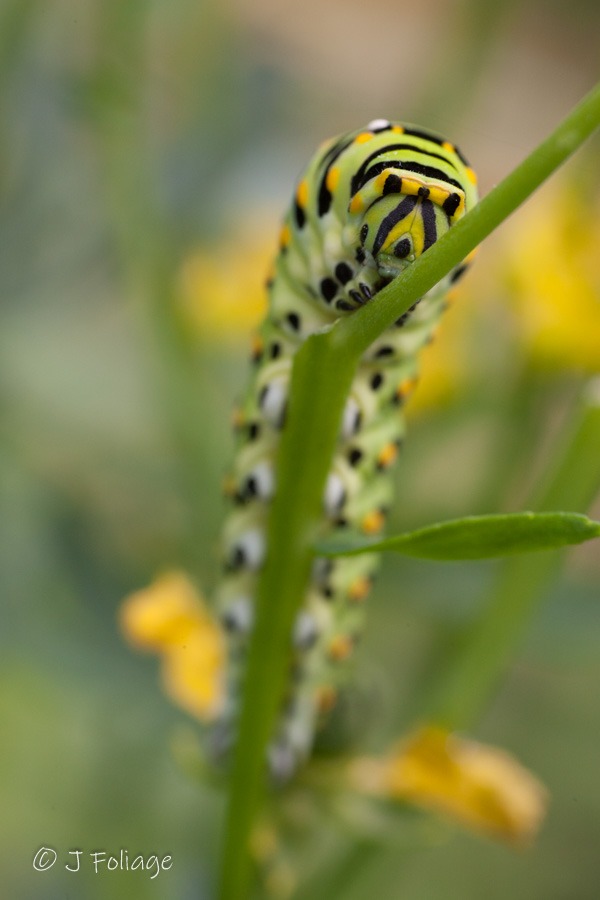
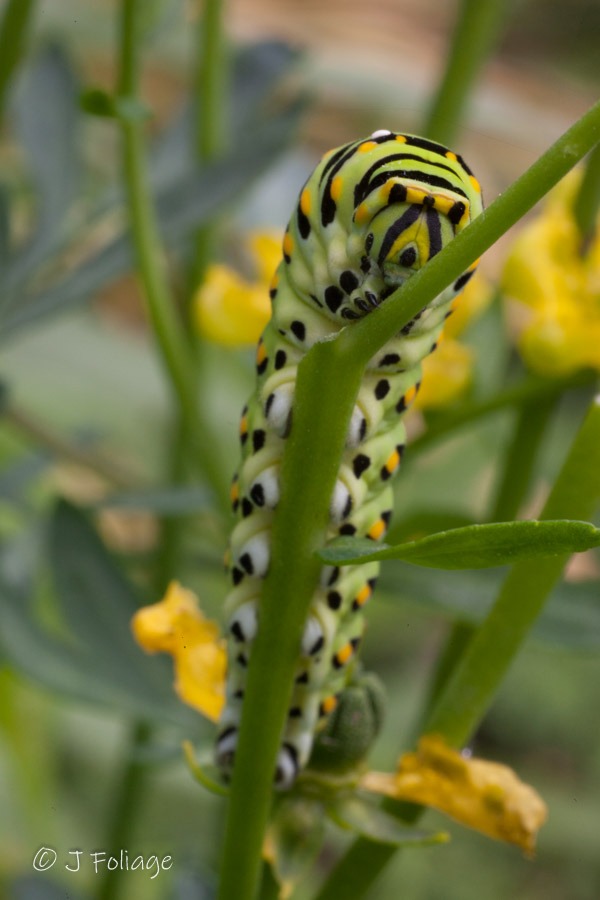
A lower number for your F-stop (F-2.8) means that what is in focus is very limited. and the viewers focus is limited in this case to just the head of the caterpillar. The larger the F-stop (F 22), the greater the depth as seen above in the three images.
If you want the whole body in focus, then try to keep the body parallel to the lens. If the subject is pointing at you and the If you place the camera so that you are capturing the caterpillar’s head with the tail off in the distance.
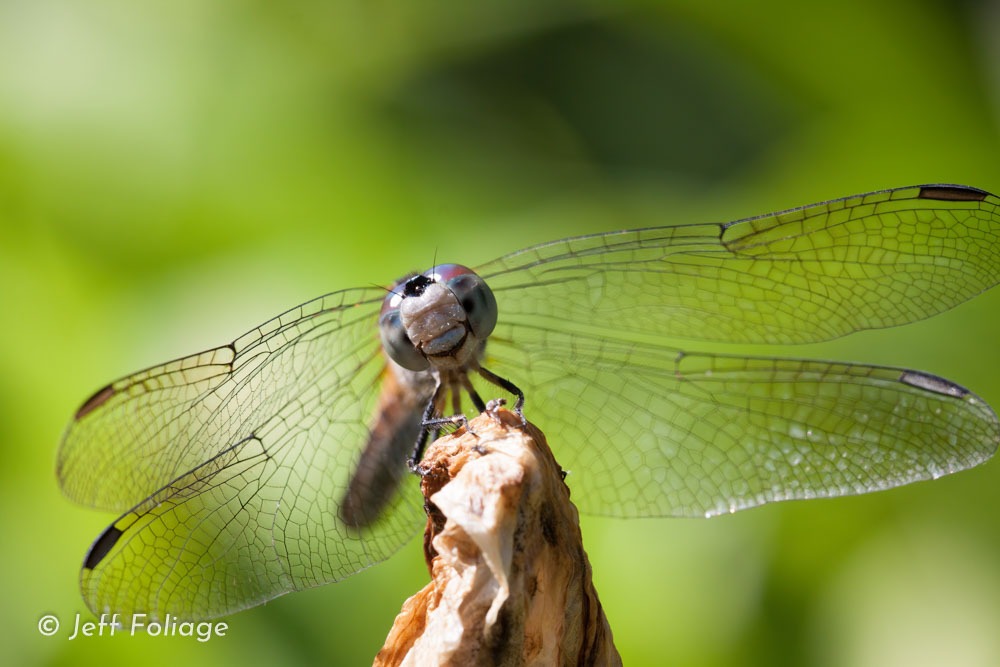
But if you are able to position yourself or the subject so they are parallel to the focal plane, the subject will most likely be in focus.
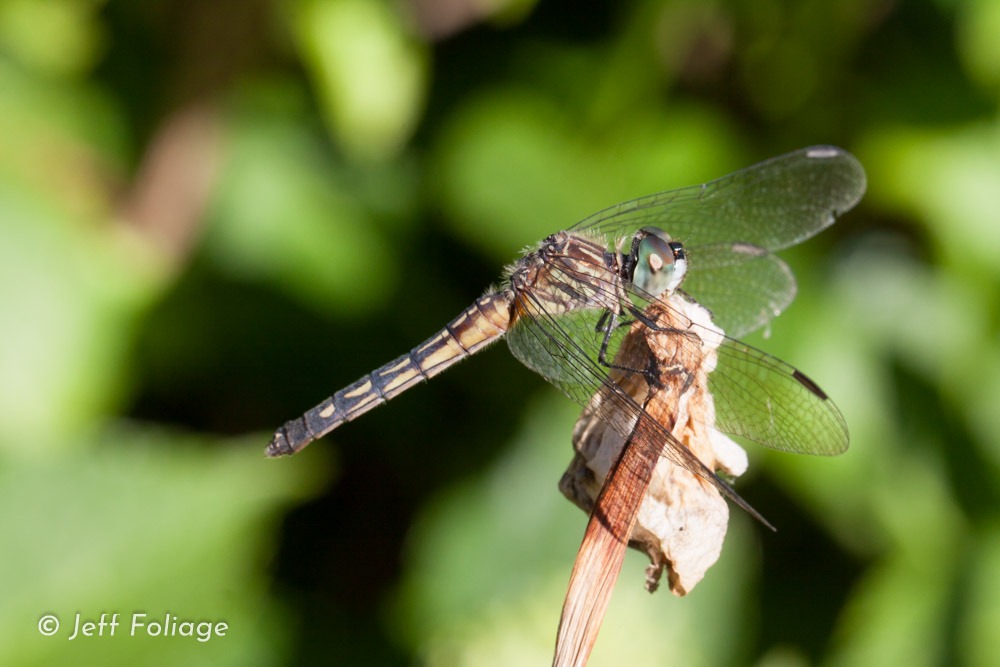
Equipment & Stability: Getting the Shot
Using a standard zoom lens (24-105mm) means I have more flexibility to be a little further away from the subject but I will lack the frame filling sharpness. I also may be able to handhold my camera instead of rigidly being stuck on a tripod.
Using a 70mm or 100mm fixed zoom lens may allow you to use it handheld but if you are going for maximum DOF and a low ISO, you may have to put it on a tripod in order to maintain sharpness
Working In Nature: Plant Knowledge & Field Awareness
Host Plants & Life Cycles: If you know the host plants for certain butterflies, then you know where to look for their caterpillars (Nice slow subjects and interesting colors) . Maybe you have a herb garden with (parsley, dill, or fennel) then you will be looking for a black swallowtail butterfly. Milk weed means monarchs of course. You can check this article on photographing butterflies.
Safety / Field Warning
It comes as no surprise that if you are out in fields of milkweeds you need to watch for poison ivy and ticks. You could come across common Rue which black swallowtail butterflies use as a host plant. You might be sensitive to it because it can leave some people feeling a little itchy.
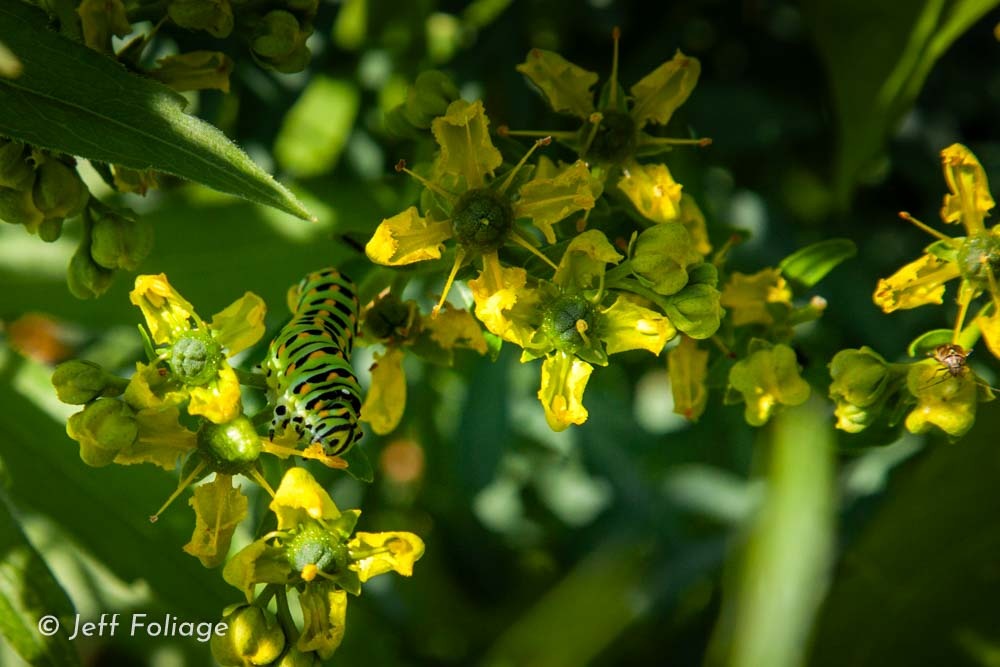
Don’t “Rue” the day you climb into their leafy greens to get a close shot. (You know I had to say that) But I will admit I didn’t know this when I got my tripod and my camera right in close with them in their habitat.
Patience and Practice will Yield great Results
Learn what works with your camera or phone and just keep shooting. See what critters will let you get close and watch your surroundings if you go off road. Bring bug spray and dress for unpleasant plant life that will leave you unhappy.
Find out what is hiding in your garden. You never know what is under the next leaf!

Jeff “Foliage” Folger
Professional Photographer & New England Guide
Landscape Photographer | Blogger | FAA Part 107 Drone Pilot
Specializing in the rugged coastlines and seasonal transitions of New England. 2026 Quadricentennial contributor.
Explore more New England scenery at Vistaphotography.com
Find your next autumn adventure at Jeff-Foliage.com
ParsleyWorm #BlackSwallowtail #ButterflyCaterpillar #PapilioPolyxenes #CaterpillarCloseUp #PollinatorGarden #ButterflyLifeCycle #GardenWildlife #NatureMacro #FromCaterpillarToButterfly #GreenCaterpillar #InsectLove #GardenDiscovery #HerbGardenVisitor #MetamorphosisMagic #BackyardEcology
Very interesting. I never noticed the yellow dot difference on the caterpillars. I have a friend in SAN Diego who has a monarch sanctuary in her back garden. It’s fascinating to observe. Your macro shots are excellent.
thanks Donna, As my dads caretaker I spent a lot of time around the house and in the garden… Macro photography kept me sane…