
How to Capture Wildlife Photos (Without the $10,000 Lens)
Most people are not professional wildlife photographers, either due to the expense of not having a “long” lens (my best is a 100-400mm) or the time involved. (I count myself in this group).
Maybe all you have is a Samsung or Iphone and the high end phones can make really good pictures. I shot this Barred Owl last spring, (S25 Ultra) and that brings me to…
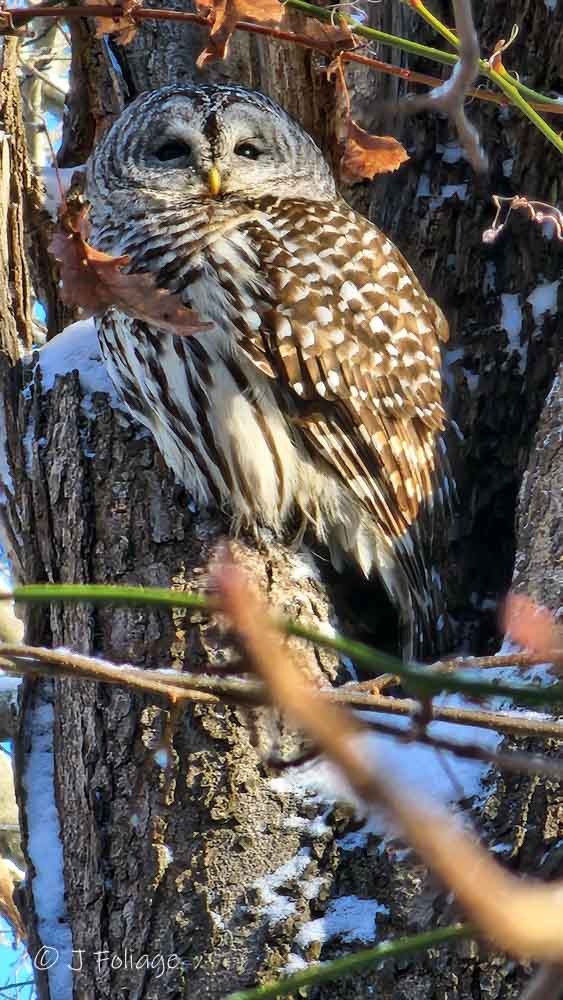
the next part of being a wildlife photographer, finding the wildlife!
There are no Guarantees!
When it comes to wildlife photography, there is always a significant element of chance involved, whether you are a professional or someone who simply takes advantage of fortunate opportunities.
Professionals often possess a great deal of patience, allowing them to sit still in cold environments for hours, waiting to capture the perfect shot of their subject. In contrast, I tend to fall into the latter category, aiming to place myself in the right environments where I am likely—hopeful—to find something interesting (anything!).
There is always a “big” element of chance when you go looking for wildlife. Whether you are a “professional” or an “Opportunity comes knocking” photographer.
A professional has a lot of patience to sit still in a cold enclosure for hours, waiting to capture the wildlife subject at the right time.
I tend to fall in the latter category by trying to put myself in the right environment where I’m hopefully in a position to find something. (anything!)
Being Ready When Opportunity Knocks!
Who wants to raise their hand and say you saw an event unfold before your very eyes, and you never thought to take a picture of it?
Wildlife photography for me is much the same. I can say I’ve seen” a live moose 10 times in my life (counting one in a Maine zoo, plus 1 in the back of a pickup). But I’ve only photographed three.
Most times, I just wasn’t prepared (I was driving) or I just wasn’t “expecting” the encounter.
For instance, during the autumn of 2017, Lisa and I were driving on the Granby Road in Vermont. Lisa saw in the Vermont Gazetteer that Cow Pond and a trail were nearby, so we stopped to explore it.
It was a short walking path that showed it had been traveled by vehicles, but as the grass was growing up in the tracks. We got to the edge of the pond (Here is a link to Cow Mountain Pond).
Autumn Conditions
It was 28 Sept 2017 in the Northeast Kingdom and not particularly colorful. It was also 11 AM, and while I’m looking out on Cow Mountain Pond, I’m not thinking or expecting wildlife, I mean, there weren’t even any ducks on the pond. My camera was around my neck… BUT! was I ready… (don’t laugh)
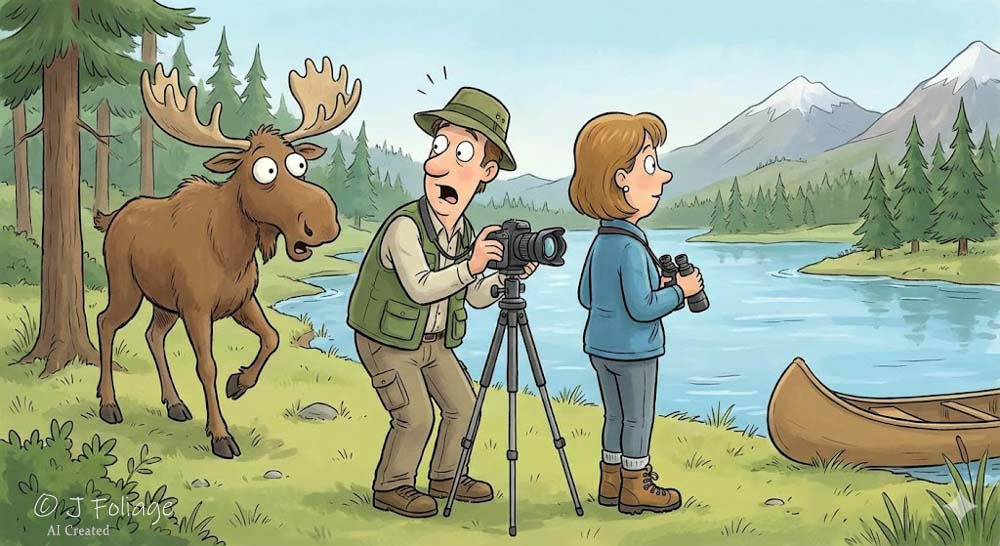
I heard a noise behind me, and I was face-to-snout with a young bull moose. The reason I’m putting this AI creation here is because I whispered to Lisa… Moose!
His eyes got cartoon big as mine, and by the time Lisa turned to see what I was talking about, all she saw was a bit of brown rump disappearing into the woods. The camera? still around my neck, and I started kicking myself (till this very day).
Did I ever bag a Bull Moose?
I’m glad you asked, 😁 remember up above I said put yourself in the right environment so that you have a chance of getting lucky to spot something.
Lisa and I were invited by friends who live in Alaska to drive into Denali. Well, this is the literal definition of putting yourself in the environment to get shots of wildlife. No, I had no idea what I might see, but I went prepared. (2 camera bodies, 2 lenses, tripod)
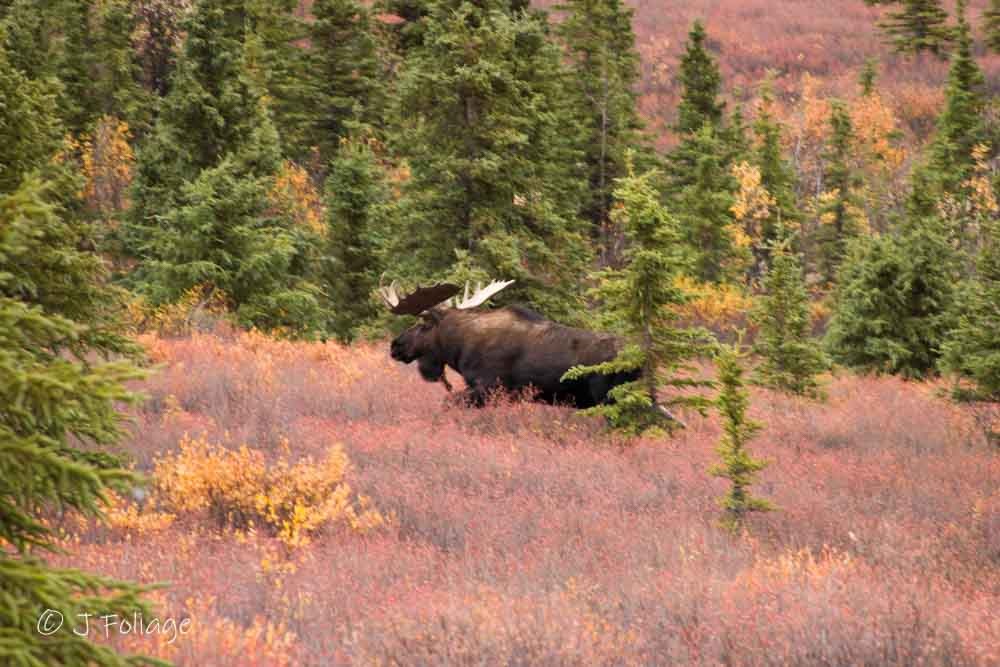
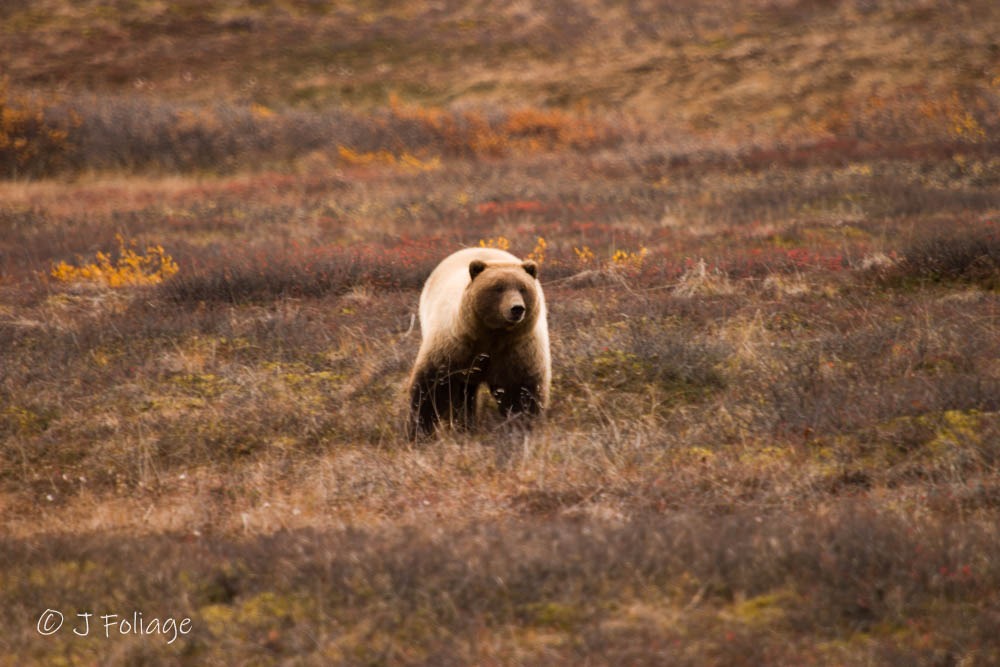

This is my only bull moose in over 20 years (outside of the one in the zoo).
Equipment
- I shot each of the animals in Denali with a Canon 10D body, but you could be shooting with anything, Sony, Fuji, Nikon, etc… They all do a respectable job. In Dec 2025, I just upgraded to a mirrorless camera (Canon R6m2)
- What is really important is the glass. The above shots were captured with a 100-300mm lens with a 1.5x tele-extender. Today I’m shooting with a Sigma 100-400mm and if needed a 2x tele-extender making it 800mm.
- But I want the Canon 200-800 RF lens ( a bit slow at 6.9 fstop) but a long reach. If you want to see what is in my wishlist in my Amazon store click this affiliate link.
- Having a fast lens is best, but generally that means F4 or F5.6; the bigger the numbers, the more light you will need (daylight, not flash) and also a slower shutter speed, which means with a moving target, blurry images (not good with wildlife).
- Lastly, a solid tripod. Mine is a carbon fibre Manfrotto that I’ve been using for 20 years. The cost was $$$, but it’s a long-term purchase and worth the expense. ($450 over 20 years is about $1.80/month)
Why is a long lens needed?
Why long glass, why not just move in real close? First, maybe you are the bird whisperer and birds come up to you and feed from your hand…
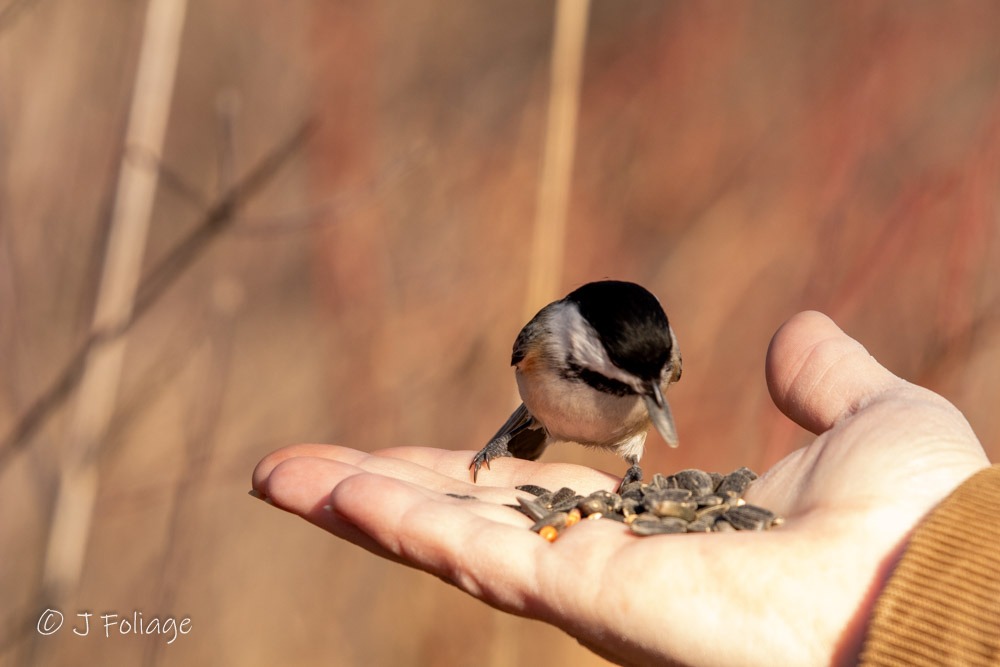
But in most cases, a long lens is needed, or a medium zoom lens with a tele-extender (magnifies the zoom’s reach), you might be close enough but not TOO close. Except in this case, I was almost too close for a 24-105mm zoom. But the Black-capped Chickadee’s at the Ipswich River Wildlife Sanctuary are very friendly IF you hold your hand out with a treat, they WILL come.
Rule 1: DON’T MAKE THEM NERVOUS!
One of our goals is to not stress the animals. In the case of the birds, if they keep flying off whenever you just got close enough for a great shot… You might be too close!
Essentially, be a quiet observer, not an intruder, and ensure your presence doesn’t harm the wildlife or its habitat.
Start with wildlife that comes to you!
Beginners can join their state’s Audubon group or look for a Nature Photographer group, ask questions and learn. You can start right at home if you have a yard with trees and bushes, learn what is there already.
Get a few bird feeders/houses and learn what different species need to thrive.

I love cardinals as most everyone does, and learning how to provide shelter and the correct food is key to photographing them. They are very nervous birds and if you get within a certain range, they are gone.
For the shot above I went to a local Audubon center and they had 8-9 feeders with different mixtures, at different heights, and lots of bushes for the birds to “hide” in (can a bright red cardinal really hide in winter?)
Once you practice on the smaller birds, try moving out into areas where more challenging animals go hunting.
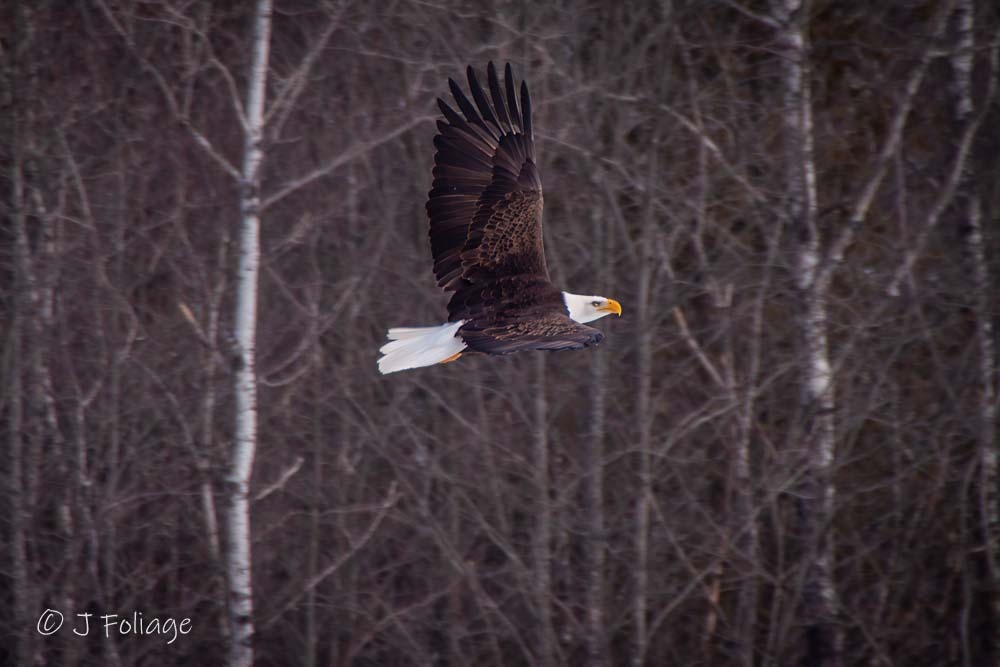
Eagles are usually found along rivers as they like to fish in shallow water where their sharp eyes can see the prey under the surface.
Know your target and where they hunt and wait for them to come to you…
Conservation Areas
If you go online, you may be surprised to find conservation areas close to your home. These “green” areas can be found in the midst of residential areas and sometimes in downtown areas. The best place to start looking for the “green” areas is the National Audubon website and from there you can go to your state and then town.
Have you ever had a ‘moose rump’ moment where you forgot to hit the shutter? Tell me your story below.
Jeff “Foliage” Folger
You can purchase my images by visiting
Fine Art America for prints, home decor, and more
Join Jeff on his social media by clicking on any of the following.
On Bluesky at https://bsky.app/profile/jeff-foliage.com
On Instagram at https://www.instagram.com/jeff_foliage/
On Facebook at https://www.facebook.com/Vistaphotography/
Comments
How to Capture Wildlife Photos (Without the $10,000 Lens) — No Comments
HTML tags allowed in your comment: <a href="" title=""> <abbr title=""> <acronym title=""> <b> <blockquote cite=""> <cite> <code> <del datetime=""> <em> <i> <q cite=""> <s> <strike> <strong>